Black Women Loving Boldly: Women’s History Month Begins
We move from Black History Month into Women’s History Month — and for Black queer women, that transition can feel complicated. Our stories often sit at the edges of both narratives. This year, I’m choosing to celebrate something simpler and more powerful: the women who hold us.
WRITINGEROTICA
Zuri Amara
3/1/20262 min read
February and March always leave me thinking.
Black History Month often centers charismatic Black male leadership — visible, celebrated, and tragically vulnerable to erasure through violence. Meanwhile, the quiet architecture of Black women’s leadership — organizing, fundraising, community care, logistics — too often disappears from the story.
And then comes Women’s History Month.
A celebration that largely highlights white women’s suffrage, equal pay, and progress narratives — with only passing acknowledgment of the complicated alliances and exclusions that shaped that movement. Indigenous women. Latina women. Asian women. Black women. Queer women. Our stories are rarely centered.
Black queer women sit at that intersection — often invisible in both months.
One of my favorite titles says it plainly: "All the Women Are White, All the Blacks Are Men, But Some of Us Were Brave."
It takes courage to live authentically when your existence disrupts comfortable narratives. To be Black. Female. Queer. Visible. Loving openly. Some of us are brave indeed.
But this year, I’m not focusing on exclusion.
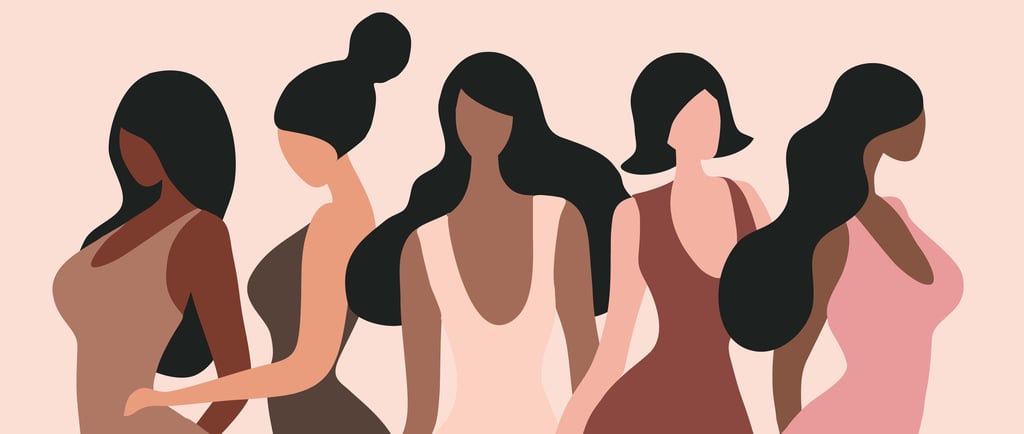
I’m celebrating the women who hold us.
You know them.
The ride-or-die girlfriend.
The auntie who calls when your voice sounds “off.”
The best friend who listens at 2 a.m. while you rage against the world.
The sisterfriend who corrects you with love.
The lover who touches you gently when you feel unlovable.
The grandma who slips you $20 at exactly the right time.
The hairdresser who becomes the community therapist when therapy isn’t accessible.
This is why I write the Crown & Glory series.
In Sisterhood, women gather not just to style hair, but to hold each other upright.
In Comfort, love isn’t flashy — it’s steady, mature, faithful, and grown.
In Secrets, intimacy demands honesty, and truth becomes its own kind of liberation.
Yes, the books contain sensuality. Yes, they explore erotic love. But at their core, they are about Black women loving Black women in all their complexity — spiritually, emotionally, physically, and communally.
The salon is not just a setting.
It's sanctuary.
It's where women gather.
Where grief is processed.
Where joy is amplified.
Where strategy is born.
Where love becomes community.
That woman-centered love builds families, by blood or by choice. It fuels grassroots action. It binds wounds the world refuses to acknowledge.
At this point in my life, I no longer wait for mainstream recognition to validate my existence. I build the spaces I need. I love who I love. I create stories that reflect the women who hold us, even if the larger society looks away.
Because when Black women love boldly, communities change.
If these stories speak to you, I invite you to follow me on Amazon so you’ll be notified when the next chapter in this universe unfolds.
Next week, we’ll explore a different kind of love — the moment friendship shifts and you realize the one you’ve been looking for might have been beside you all along.
Celebrating you,
Zuri
Empowerment
Celebrating black women's sensuality through storytelling.
Desire
Passion
zuri@lipseylovelegacypress.com
© 2025. All rights reserved.