Pride: Notes from an African American Lesbian
Zuri discusses Pride, contradictions, and loving Black women anyway
Zuri Amara
6/8/20264 min read
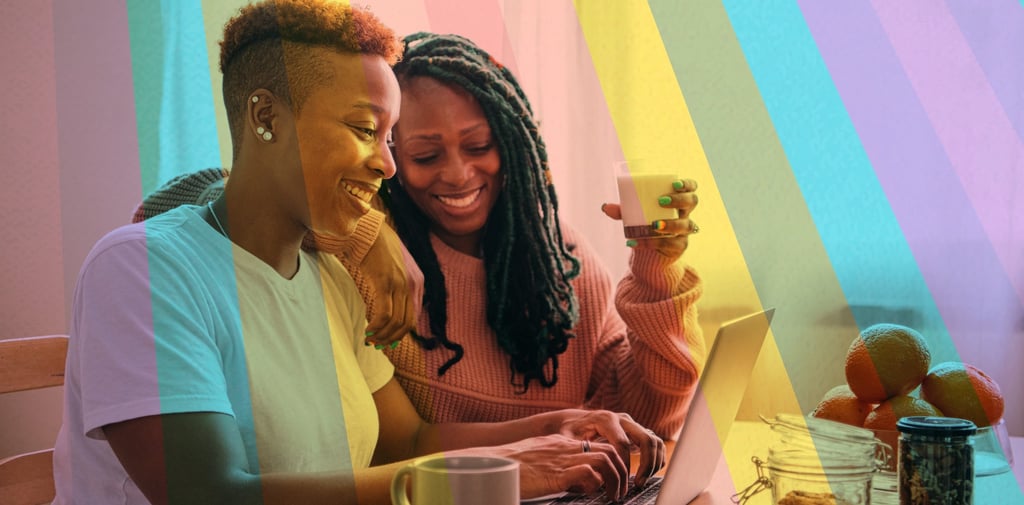
June is Pride Month, now recognized internationally as a time to commemorate the history, struggles, and triumphs of the LGBTQIA+ community. What began after the 1969 Stonewall uprising in New York City has evolved into a global recognition of people who dared to insist upon their humanity in a world that often denied it.
As a descendant of the African diaspora, a beneficiary of the Emancipation Proclamation, an American, a woman, and a lesbian, I approach the concept of pride from several directions at once. Lord knows, I would not be able to lift my head in the morning if I were not comfortable holding multiple contradictions at the same time. Sometimes I code-switch so fast, I get whiplash.
So yes, I am a proud African American lesbian.
But I am also aware of the cracks between communities where people like me can become invisible, hidden, or forgotten.
I love this country, even while understanding the history that brought my ancestors here. The descendants of enslaved Africans inherited both the promise and the violence of America. We are tied to a history of unimaginable suffering and extraordinary resilience. We are also tied to an African legacy far older and more complex than many people realize. The forced migration of millions permanently altered both Africa and America, creating a people who have had to build identity from fracture and survival.
And still, we keep the faith.
Black people have always had an extraordinary ability to imagine freedom before we could fully touch it. We continue to believe in the possibility of America even while living inside its contradictions.
I was raised in a Black community that poured pride into me. My dark pecan skin, my curves, my kinky 4C hair, our deep faith, our family stories, our ancestors, our resilience — all of it was celebrated. In my family, Black history was not confined to February. The ancestors sat with us at family reunions, in church pews, and at kitchen tables.
But pride does not blind me.
I can see the pain in our communities, too. We are still carrying generations of trauma from slavery, segregation, economic instability, violence, and survival itself. Sometimes that pain turns inward. The fractures between Black men and women have deepened in ways that grieve me. Too often, we wound each other while trying to survive systems that wounded us first.
And yet I still believe Black love is worth fighting for.
I worry sometimes that younger generations inherited the language of liberation without always inheriting the patience required for long struggle. Social media rewards speed, outrage, and performance, while real community requires endurance, accountability, and grace. But every generation has its blind spots, including mine. Lord knows our elders probably looked at us and wondered what in the world was coming next.
Still, I pray for us. I pray we do not lose each other completely.
As a professional Black woman moving through corporate and academic spaces, I learned another difficult truth: many institutions were never designed with us in mind. I was naïve enough to believe that hard work, credentials, and competence alone would open doors that had remained closed to generations of Black women before me.
Sometimes they did.
Sometimes my education and confidence made people deeply uncomfortable.
An educated, articulate, competent Black woman represents change whether she intends to or not. Some people welcome that. Others experience it as a threat to systems that have historically centered white male authority and comfort.
That realization was painful, but clarifying.
I also identify as a womanist, which means I cannot separate gender from race, community, culture, or history. My experiences with feminism have often reflected that tension. While white women and Black women struggle under some of the same patriarchal systems, we do not always move through those systems with the same risks or consequences. Too often, Black women are expected to show solidarity while receiving little protection in return.
That is not bitterness. It is a historical observation.
And then there is Pride itself.
Yes, I stand proudly with my LGBTQIA+ community. I honor the people who risked everything to demand dignity, visibility, and freedom. We stand on the shoulders of people who refused to disappear quietly.
But even under the Pride flag, I sometimes feel invisible again.
Mainstream queer culture often centers white gay male experiences and aesthetics, while the histories and realities of Black lesbians remain underrepresented. Black women who love women have always existed. We have always created families, communities, art, literature, churches, movements, and safe spaces for one another. Sometimes loudly. Often quietly. But consistently.
I want our stories seen, too.
And if I am honest, our own Black lesbian communities are not free from contradiction either. Some relationship dynamics still mirror rigid heterosexual gender expectations in ways that deserve examination. We escaped one set of rules only to recreate others. Surely, as Black lesbians, after surviving racism, sexism, homophobia, and every other “ism” society could invent, we are brave enough to imagine relationships beyond rigid performance and inherited roles.
More contradictions.
If I could not live with contradictions, I would not be able to lift my head off my pillow each morning. It is getting harder some mornings to lift my head from carrying all of these realities at once.
But I do.
Because despite everything, I remain deeply proud to be an African American woman who unapologetically loves other African American women.
There is power in living honestly inside complexity.
Black lesbians occupy a unique position in this society. We see things others often cannot see because we move between worlds that rarely fully embrace us. That perspective can be exhausting. But it is also profoundly valuable.
We understand survival.
We understand love in the face of struggle
We understand reinvention.
We understand chosen family.
We understand contradiction.
And perhaps more than anything else, we understand what it means to keep loving anyway.
So this Pride Month, I celebrate all of it — the beauty, the tension, the history, the struggle, the joy, and the contradictions.
Happy Pride Month, y’all.
Keep your head up.
Zuri
Empowerment
Celebrating black women's sensuality through storytelling.
Desire
Passion
zuri@lipseylovelegacypress.com
© 2025. All rights reserved.